Autism
Our support,
When we meet an autistic person, we know that by listening to them and their friends and family, we will increase our understanding of how to support them. This helps us build an Autism Profile with each person. We encourage people to gain self- awareness and increased understanding of their Autism. This enables us to provide the support which makes the most of the gifts and skills their Autism can bring, as well as seeking to reduce the difficulties each person will face. Our aim is to ensure a real sense of wellbeing and self-worth.
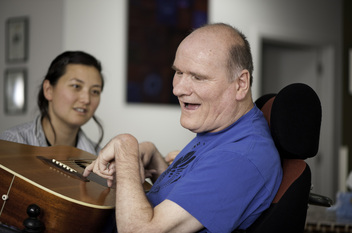
We encourage and motivate each person to feel good about themselves. We support people to gain confidence and do the things that are important to them and ultimately to lead happy and fulfilled lives.
Our experienced and well trained staff are supported by our Autism Advisor, Communication Development Workers, Psychologists, Clinical Support Nurses and Behavioural Advisors who have a wealth of knowledge and experience of working with autistic people.
We understand that people may feel anxious about change. We ensure that each person has a transition plan which includes pre-visits, personal information booklets, photo’s, maps, timetables, social stories and schedules to ensure everyone feels welcome as well as comfortable.
Person Centred Planning
Our staff support each person to create a person-centred plan that tells us how they want to live their life now and in the future. Through a range of communication tools, we ensure that each person is closely involved in the development of their own plan.
Some examples of how we have supported people include:
- Working towards independence with personal care tasks
- Skills building to manage money
- Travel training to gain confidence and independence
- Learning to stay healthy and exercising
- Support with medication and health appointments
- Utilising the range of special interest that people have to facilitate learning
- Discovering new hobbies, getting out and having fun
- Accessing vocational training and work experience
- Managing correspondence and bills
- Building social skills and expanding social circles
Person Centred Planning
Autism friendly interventions:
- Using clear and unambiguous language
- Giving structure to a meaningful day – meaningful to the individual
- Offering visual support to aid communication
- Social stories to gain a perspective on how other people think
- Regular exercise as part of a positive predictable routine
- Support for sensory processing differences and difficulties
Specialist support:
Each person discusses their likes, interests, goals and aspirations with their Key Worker. These could include starting a college course, having a job, wanting to cook or just having the confidence to go to the shops. Staff support people towards achieving their goals. This may require social stories, education on social norms, understanding body language and facial expressions.
Practical skills support:
- Accessing college courses
- Independent living
- Support to find a meaningful job
- Self-care
- Budgeting
- Food preparation
- Shopping